Hot showers that fade to lukewarm halfway through. A dishwasher that leaves glasses cloudy, no matter which rinse aid you add. The kettle whistles a minute slower every year. If your home has hard water and aging pipes, scale buildup is probably running the show behind the scenes, choking flow and turning efficient appliances into power-hungry slouches. At some point, cleaning vinegar through the coffee maker won’t cut it. That’s when repiping stops feeling like a scary, expensive word and starts sounding like a reset button.
I’ve opened walls in bungalows built in the 40s, ranches from the 70s, and townhomes that were “updated” in the 90s. Different styles, same story: old pipes with crusty interiors and a family of appliances paying the price. Repipe Plumbing projects are not only about stopping leaks or meeting code. They’re also about giving your water heater, dishwasher, washer, ice maker, and fixtures the working conditions they need to perform like they were designed.
Scale is not just ugly, it is mechanical
Scale looks like chalk, but it behaves like concrete. When dissolved minerals in hard water, mostly calcium and magnesium, get heated or depressurized, they fall out of solution and stick. The inside of your pipes becomes a coral reef. That texture increases friction, which cuts water velocity, which makes heaters work longer and valves strain harder. Over years, scale compacts into a stubborn shell. You can flush a tank or descale an appliance, but the moment water travels through a scaled line, it picks up grit and the problem returns.
If you could see a cross section of a 30-year-old galvanized steel pipe in a hard-water city, the original half-inch opening might have Look at more info a ragged tunnel barely wide enough for a pencil. Copper fares better but still collects deposits at elbows, tees, and anywhere the water slows. Old PEX can collect sediment pockets if it sags. Brass shutoff valves, cartridge filters, and solenoids inside appliances collect the same mineral crust. You don’t need a lab to measure the effect. You hear it in sputters at the tap, you feel it in weak shower heads, and you pay for it with rising utility bills.
The quiet tax of hard water on appliances
Manufacturers publish performance curves you rarely see unless you dig through spec sheets. There, you’ll find a theme: flow matters, inlet temperature matters, and pressure matters. Scale undermines all three.
For a tank water heater, scale acts like a blanket under the flame or elements. Heat transfers poorly into the water, so the burner cycles longer. A thin layer, about a sixteenth of an inch, can bump fuel use by 5 to 10 percent. On older tanks that have never been flushed, I’ve scooped out several pounds of flakes, like aquarium gravel. Tankless units suffer in a different way. They rely on tight passages and a sensor orchestra. Scale on the heat exchanger triggers error codes and shortens life. When the inlet water arrives restricted or cooler than expected because it shed heat into a scaled line, a tankless unit works harder to deliver the set temperature, sometimes throttling down to protect itself.
Dishwashers show scale in two places: spray arms and the heating element. Minerals clog the tiny jets and leave a matte finish on glassware. Modern dishwashers use far less water than models from two decades ago, which is a good thing for the planet, but it means they can’t blast through restrictions. They need clean, consistent flow at about 120 to 140 degrees Fahrenheit. If your hot line is scaled, temperature drops on the way, and the machine must heat longer, stretching cycle times and drawing more power.
Clothes washers mostly suffer from slow fill and gritty residue. When the inlet screens plug with mineral grains, the control board thinks the supply is off and throws an error. Ice makers and coffee systems get clogged lines and scaled valves. Shower valves age faster when abrasive crystals grind against seals. Across the board, scale is a multiplier. It amplifies the small inefficiencies until you feel them daily.
Why repiping changes the outcome, not just the symptom
You can’t descale the inside of an old galvanized system. You can’t undo the pinched elbows and patchwork of add-ons from decades of fixes. You can flush, you can change anode rods, you can acid-wash a tankless heat exchanger. Those are maintenance tasks worth doing. But if the water path between the water main and your fixtures acts like a gravel road, appliances will keep taking a beating. Repiping turns that gravel into smooth asphalt.
Modern repiping gives you three big gains for appliance performance:
First, a clean bore. New copper or PEX with proper sizing delivers the volume and pressure appliances expect. When a dishwasher requests 1.5 gallons per minute during fill, it gets it without starving the shower on the other side of the wall. Flow rates stabilize. Spray patterns stop sputtering. Fill times become predictable, which prevents control boards from tripping.
Second, better thermal behavior. With old metal lines encrusted inside, water gives up heat to the mineral mass as it moves. New lines avoid that heat sink effect. PEX in particular, when routed cleanly, can minimize heat loss on runs to laundry rooms or distant baths. That means water heaters and tankless units don’t have to overwork to deliver target temperatures at the tap or appliance.
Third, compatibility with treatment. If you plan to install a water softener, conditioner, or filtration, a repipe lays out the trunk and branch system so treatment can be centralized and effective. It closes off odd loops and abandoned lines that collect stagnant water and sediment. I’ve seen homes where a softener helped kitchen fixtures but left the laundry on a bypass nobody remembered. Repiping fixes the map.
Material choices and how they affect scale and performance
I’ve worked with copper, PEX, and CPVC. Each has a personality. Choosing the right one matters for longevity, noise, and how well your appliances behave.
Copper, type L, is a classic for a reason. It tolerates heat, resists UV, and has a smooth interior that doesn’t easily hold deposits, especially under softened or moderately hard water. It supports crisp directional changes and has a reassuring rigidity that makes fixtures feel solid. Downsides: it can transmit water hammer if not controlled, and in very aggressive water with low pH, it can pit. Labor is higher, joints require skill, and theft can be a concern in some areas if exterior runs are exposed.
PEX, usually PEX-A with expansion fittings or PEX-B with crimp rings, offers gentle curves, fewer fittings, and faster installs. The interior is slick, so scale is less likely to adhere compared to roughened old metal. PEX dampens hammer and insulates a bit better than copper. If a PEX project is planned well, with a home-run manifold, appliances can get dedicated lines with minimal shared pressure drops. Downsides: UV sensitivity, temperature limits near water heaters unless using rated transition stubs, and potential taste concerns for a short break-in period. Cheap fittings or sloppy bends can create constrictions that behave like permanent clogs, so the crew’s experience matters.
CPVC sits in the middle. It is inexpensive, chemically resistant, and easy to solvent-weld. In my region, it is less common in full-house repipes due to brittleness over time and noise. For appliance performance alone, it does fine when installed cleanly, but I prefer copper or PEX for durability and serviceability.
In hard-water cities, I often recommend PEX with a central manifold, paired with a treatment loop. The manifold gives each appliance a straight shot. If the dishwasher is complaining about slow fills, you can shut off only that circuit and diagnose quickly. Copper serves beautifully for short, exposed runs where durability and heat tolerance matter, such as near the water heater or at the laundry box.
The role of pipe sizing and layout in appliance performance
Repiping is not only swapping materials. It is a chance to correct sizing mistakes and lazy routing. Builders sometimes run a single half-inch line a long way, feeding a bathroom group, laundry, and kitchen. It works on move-in day. Ten years later, the dishwasher and shower collide every evening. Scale shrinks the effective diameter, compounding the problem. During a repipe, we redesign the trunk and branch or manifold plan to match your actual living patterns.
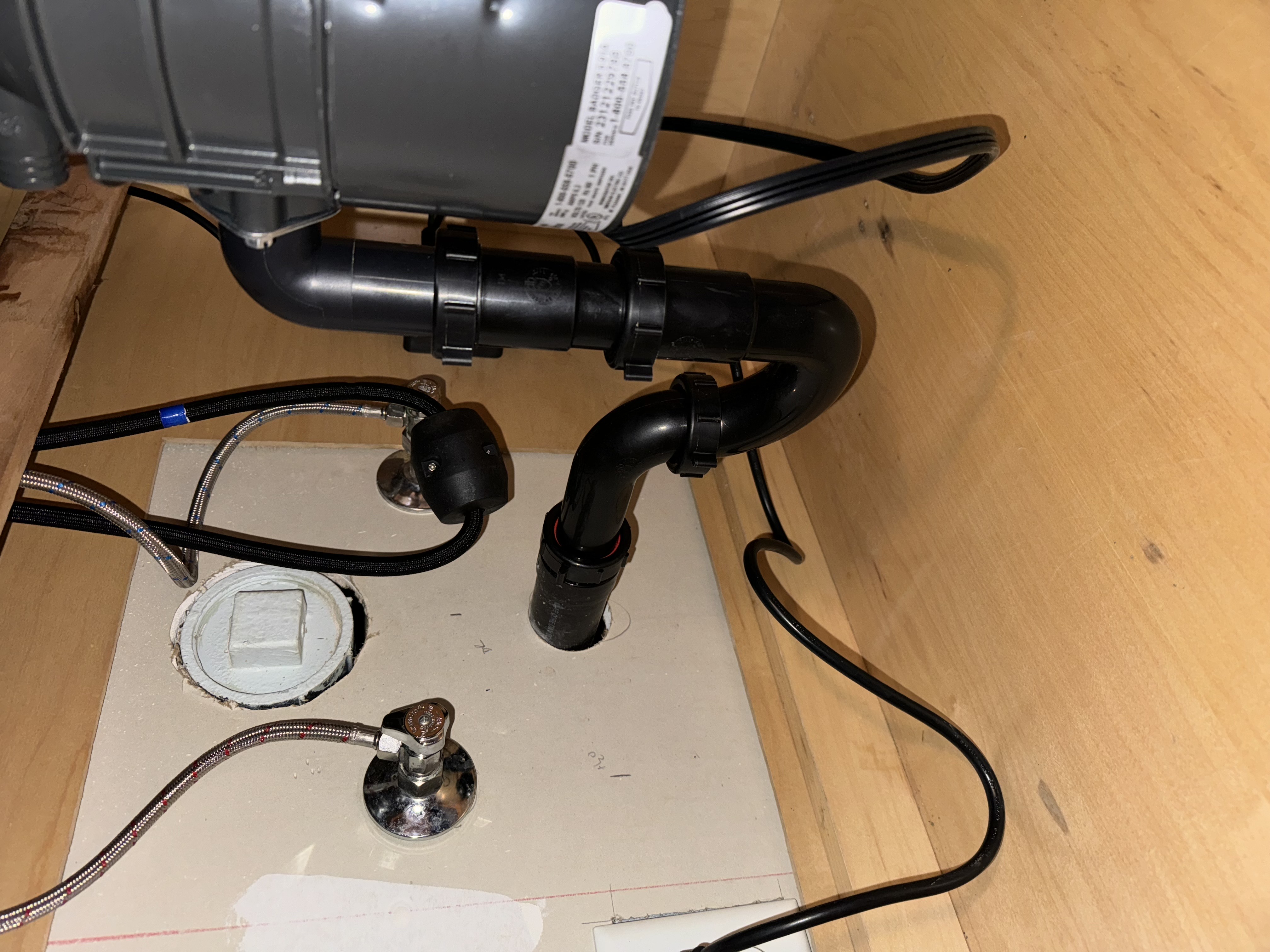
Two examples come to mind. A family in a two-story farmhouse had a tankless unit that kept throwing a low-flow code on winter mornings. The cause wasn’t the heater. The hot run to the upstairs baths snaked through a maze of elbows. At the same time, the laundry pulled from the same half-inch hot line on the first floor. When the washer opened, pressure dropped, velocity slowed, and the tankless believed the taps closed. We replaced the hot trunk with a three-quarter-inch PEX run, gave the laundry its own half-inch branch, and straightened the upstairs path with long sweeps. The tankless stopped complaining, and the morning routine settled down.
In a different case, a craftsman bungalow had a copper repipe from the 90s, decent work but cramped under the crawlspace. The dishwasher took three and a half minutes to fill. We measured only 45 psi at the appliance’s valve when the sink ran. The fix was a short reroute to avoid a kinked pass under a beam and installing a dedicated shutoff with full-bore quarter-turn valves. Fill time dropped under a minute. No appliance changed. The pipes did.
The hidden gains: water hammer, noise, and valve longevity
If you’ve ever heard a thud behind the wall when the washer stops mid-fill, that’s water hammer. Old metal systems with scale amplify that shock because the water column behaves like a solid rod. The jolt hammers solenoids in appliances and chews gaskets in mixing valves. Repiping with PEX, adding arrestors at strategic spots, and eliminating dead legs calms the system. Appliances last longer when they don’t get punched every cycle.
Noise matters too. Old pipes can vibrate against studs or strap points, especially where someone used metal-on-metal without cushion. Those vibrations are not only annoying. They signal friction and instability. During a repipe, proper isolation, cushioned clamps, and gentler bends tame the chatter. Your dishwasher sounds quieter not just because it is insulated, but because the supply and drain behind it aren’t transmitting rattle.
Water quality partnerships: softening, filtration, and realistic expectations
Repiping often opens the door to a broader water strategy. If your municipal report shows hardness above, say, 7 grains per gallon, consider adding a softener or a conditioning system as part of the project. A softener trades calcium and magnesium ions for sodium or potassium, which dramatically reduces scale formation. Conditioners use different methods, like template-assisted crystallization, to keep minerals suspended so they pass through without sticking. They don’t give the same feel as soft water, but they are low maintenance and salt-free.
Here is a compact checklist that helps decide whether to bundle treatment with a repipe:
- Hardness consistently above 7 to 10 grains per gallon, measured at your tap, not just the city report. Appliances with heat exchangers or on-demand heating, like tankless units, high-efficiency dishwashers, and combi boilers. History of scale rings on fixtures, cloudy glassware, or frequent cartridge replacements. Plans to keep the home long enough to benefit from reduced maintenance, typically 5 to 10 years. Taste, odor, or sediment that shows up seasonally, suggesting you might add a whole-house filter or a cartridge at the kitchen sink.
Set expectations honestly. Softening helps future scale, but it can’t dissolve the stone fortress inside old lines. That’s where the repipe earns its keep. After repiping, appliances you’ve descaled will stay clean far longer. A tankless unit that needed servicing every year might stretch to three. A dishwasher that needed a rinse aid crutch can hit its advertised performance with standard detergent. You’ll still need to do periodic maintenance, but the curve tilts your way.
How Repipe Plumbing projects actually unfold
Homeowners often ask if a full repipe means living in a construction zone for weeks. Done well, it looks more like a fast, choreographed sprint. A typical three-bedroom, two-bath home can be repiped in two to five days depending on access, material choice, and finish requirements.
The crew maps the system first, marking fixture groups and planning the main feeds. If we’re using a manifold, we pick a central location, often near the water heater or in a utility space. Holes are cut with care to avoid patchwork scars, often at the base of closets and behind appliances. Old lines are capped as new lines are pulled. Water is off for part of the day, then restored on a temporary basis each evening when possible. Pressure testing happens before walls close. If drywall work is part of the contract, taping and texture follow. Good crews clean as they go and label shutoffs so you don’t hunt later.
From an appliance standpoint, coordination makes a difference. We schedule the dishwasher, washer, and fridge reconnections, purge lines to keep mineral chunks out of appliance screens, and verify hot and cold orientation. With tankless units, we install service valves if none exist. With standard tanks, we flush and add a proper dielectric union if it’s missing. These are small details that show up later in fewer service calls.
The dollars and the math of efficiency
Repiping is a capital expense, not a minor repair. Costs vary widely by region, material, access, and finish work, but homeowners in the U.S. commonly see ranges from several thousand dollars for small, accessible homes to five figures for larger or complex layouts. That can feel like a lot when your main complaint is a fussy dishwasher. But the math doesn’t stop at one appliance.
Consider a gas tank water heater working 10 percent harder due to scale. If your annual gas spend for hot water is around 300 to 500 dollars, that’s 30 to 50 dollars a year wasted on heat that never makes it to the tap. Add the energy penalties of longer dishwasher cycles, extra dryer time because washer rinse water is cooler than expected, and the shortened life of valves and seals. Over a decade, it’s easy to burn through a few thousand dollars in hidden losses. If you add the risk of leaks from weakened pipes and the damage a single pinhole can cause to floors and cabinets, the value of repiping becomes less abstract.
The payback is not instant. It’s a combination of efficiency gains, fewer service calls, and longer appliance life. A tankless unit that lasts 18 years instead of 12 because it hasn’t been tortured by scale and hammer is worth real money. A dishwasher that cleans in its standard 90-minute cycle instead of rattling for three hours saves electricity and your patience.
Edge cases and when repiping isn’t the first move
Not every home needs a full repipe to help appliances. Sometimes a partial plan delivers the lion’s share of improvement.
If your cold water is fine and only the hot side shows slow flow and temperature drop, a hot-side repipe might cover most fixtures at a lower cost. In condos, where common walls complicate access, targeted replacements combined with point-of-use treatment can bring relief. Homes with newer copper that suffer mainly from sediment can benefit from a whole-house filter and a rework of choke points, like replacing old multi-turn angle stops with full-port quarter-turn valves.
If you have moderately hard water but excellent static pressure, start with a professional descale of appliances and install hammer arrestors. Then monitor flow rates and cycle times for a month. If they creep back, the piping is likely the culprit. When budget is tight, repiping the trunk and the lines to the heaviest hitters, like the water heater, laundry, and kitchen, can buy time until a full project fits.
There are also circumstances where repiping should pair with other work. If you plan a kitchen or bath remodel, aligning timelines saves wall repairs and duplicates. If your water main is old and undersized, replacing interior lines won’t fix pressure loss from the street. A thoughtful Repipe Plumbing contractor will test from the curb to the fixtures and show you the numbers before pushing ahead.
Practical signs your pipes are holding your appliances back
You don’t need a scope camera to suspect scale and restrictions. A few day-to-day tells stand out.
- The dishwasher fill sound changes from a quick surge to a long hiss, and cycles stretch without error codes. The washing machine throws a slow-fill code, especially on hot, even after you clean the inlet screens. The shower goes tepid when someone opens a tap elsewhere, despite a healthy water heater or tankless unit. Faucets spit air and water in bursts after sitting, suggesting partial blockages and trapped pockets. Ice makers produce smaller cubes and take longer to fill trays, and your kettle leaves a chalk ring in a week.
If several of these show up together, your appliances are compensating for the system, not failing on their own.
What a good repipe looks like when it’s done
When the dust settles, the proof is simple. Hot water reaches the dishwasher quickly, and it sounds like it’s breathing, not wheezing. The washer hits its fill level without timing out. The water heater, whether tank or tankless, cycles predictably. Your pressure gauge reads steady when multiple fixtures open. Shutoff valves are accessible and labeled. The system feels quiet and composed.
Homeowners often tell me the biggest surprise is not raw pressure, but consistency. Showers don’t go from perfect to punishing when someone flushes. The dishwasher runs its standard cycle and actually gets glasses clear without exotic detergents. Maintenance becomes routine instead of reactive.
Final thoughts from the crawlspace
If you fight scale every month, replacing a dishwasher is like putting new tires on a car with seized brakes. It might roll better for a bit, but the deeper resistance remains. Repiping is the moment you release the brake. It clears the path so every appliance can do its job without strain. Pair that with smart sizing, clean routing, and, where appropriate, water treatment, and you transform the personality of your plumbing.
I’ve crawled away from jobs where we didn’t install a single new appliance, yet the kitchen felt reborn. The coffee maker brewed faster. The dishwasher finally earned its Energy Star. The water heater stopped grumbling. That’s the quiet power of a well-executed Repipe Plumbing project. You don’t notice the pipes day to day. You notice that your home simply works, and that the soundtrack shifts from rattles and hisses to a steady, confident hush.
Business Name: Principled Plumbing LLC Address: Oregon City, OR 97045 About Business: Principled Plumbing: Honest Plumbing Done Right, Since 2024 Serving Clackamas, Multnomah, Washington, Marion, and Yamhill counties since 2024, Principled Plumbing installs and repairs water heaters (tank & tankless), fixes pipes/leaks/drains (including trenchless sewer), and installs fixtures/appliances. We support remodels, new construction, sump pumps, and filtration systems. Emergency plumbing available—fast, honest, and code-compliant. Trust us for upfront pricing and expert plumbing service every time! Website: https://principledplumbing.com/ Phone: (503) 919-7243